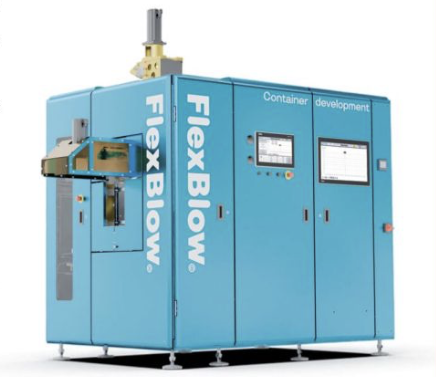
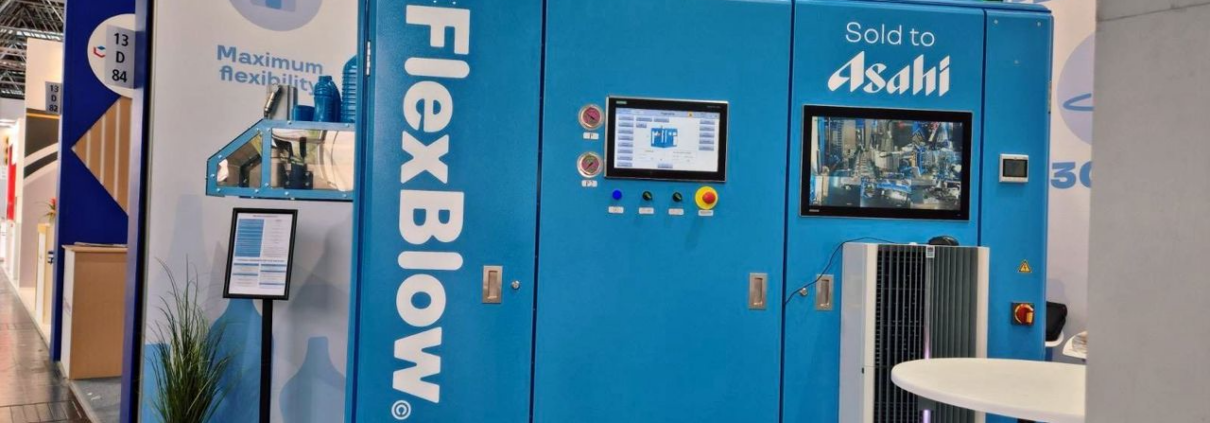
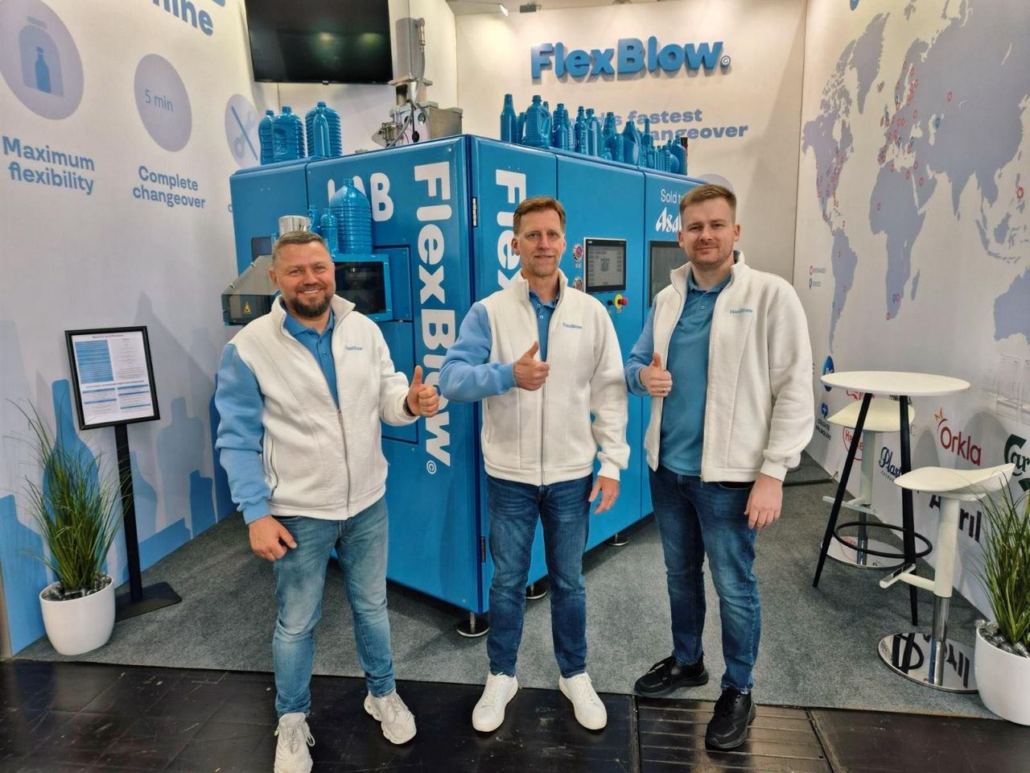
At Interpack 2026, FlexBlow, the Lithuanian manufacturer, showcased its compact FlexBlow 1 LAB machine designed for maximum flexibility in PET packaging development and prototyping.

The main features of the system:
– Largest flexibility, 5-minute complete changeover, fits < 5 m²

– Designed for prototyping, process development, and validation

– Compatible with a wide range of bottle formats, neck finishes, and container types

– Full industrial process logic in a compact LAB-scale solution.

Why Interpack?

Designed exclusively for industry experts, executives, and key decision-makers, the Interpack Event lineup offers high-level strategic direction for the future.

The program highlights the exact trends and challenges currently transforming the packaging landscape, with a core focus on:

➡️ Sustainability & circular economy
➡️ Digital transformation and automation
➡️ Smart manufacturing & software-defined factory
➡️ Regulatory developments such as the EU Packaging Regulation
➡️ Innovative materials and design for recycling
➡️ Supply chain resilience and resource efficiency.

International events consistently open doors to new business connections, markets, and opportunities. Let’s expand our global business network!
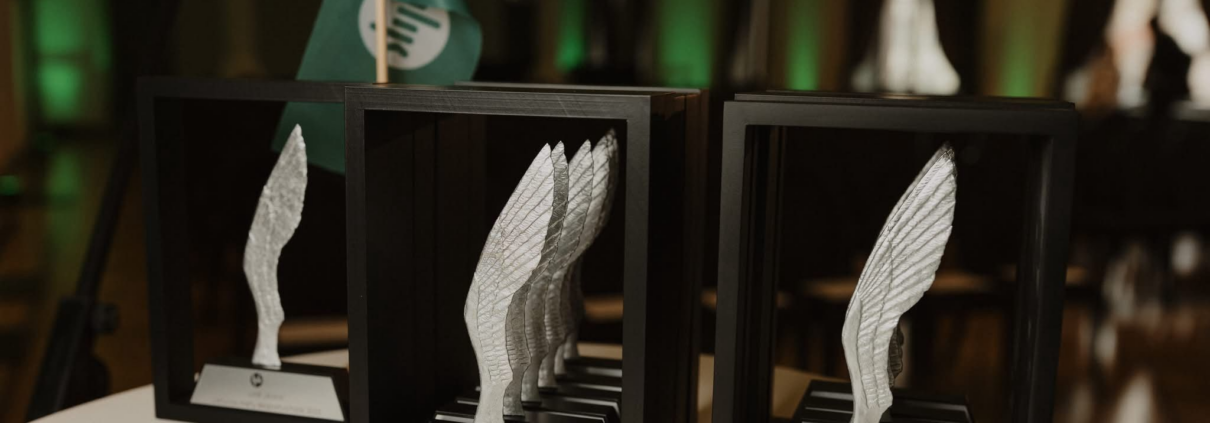
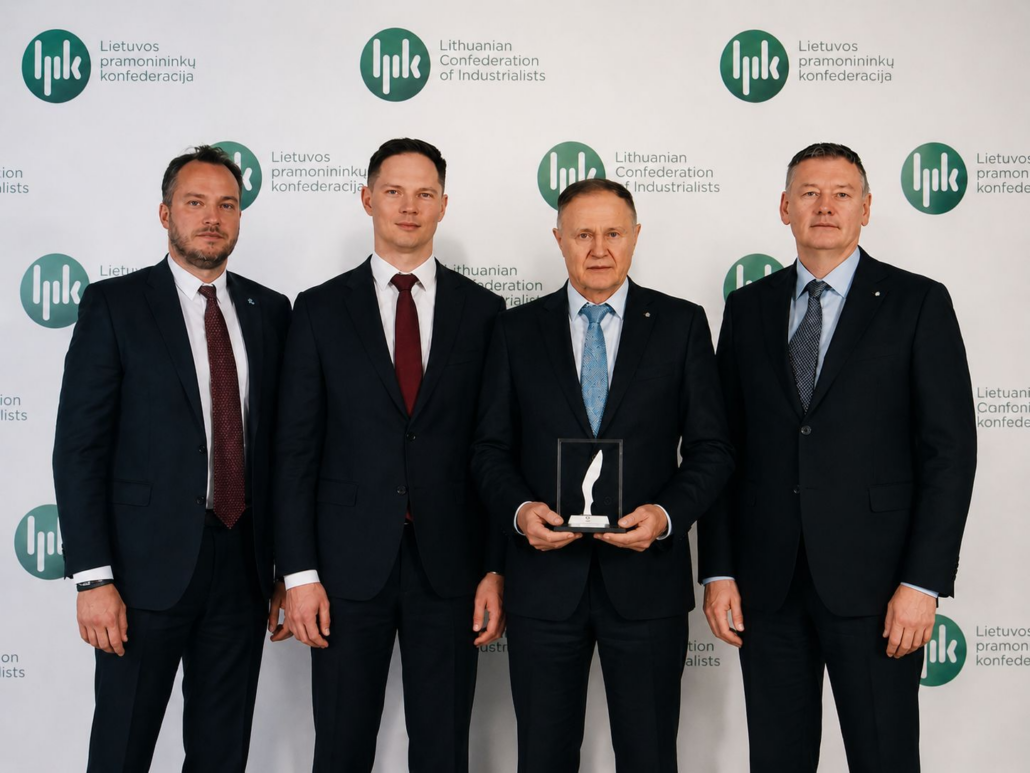
UAB Pack Klaipeda was officially named ‘Lithuanian Exporter of the Year 2025’ by Lithuanian Confederation of Industrialists. Congratulations!

This marks the 15th time the company has received this prestigious award. It’s a powerful testament to their hard work, high quality standards in international markets.

Even during changing economic times and global competition, ‘Pack Klaipėda’ has remained a reliable partner for its clients and a top leader in Lithuania’s export industry.

More Than Just Business Success

This award represents much more than financial growth. It is a direct celebration of the company’s dedicated team, deep industry expertise, continuous drive for innovation, and daily commitment to responsibility.

Moving forward, UAB Pack Klaipėda remains fully committed to its strategic path of global expansion, innovation, and absolute quality excellence.

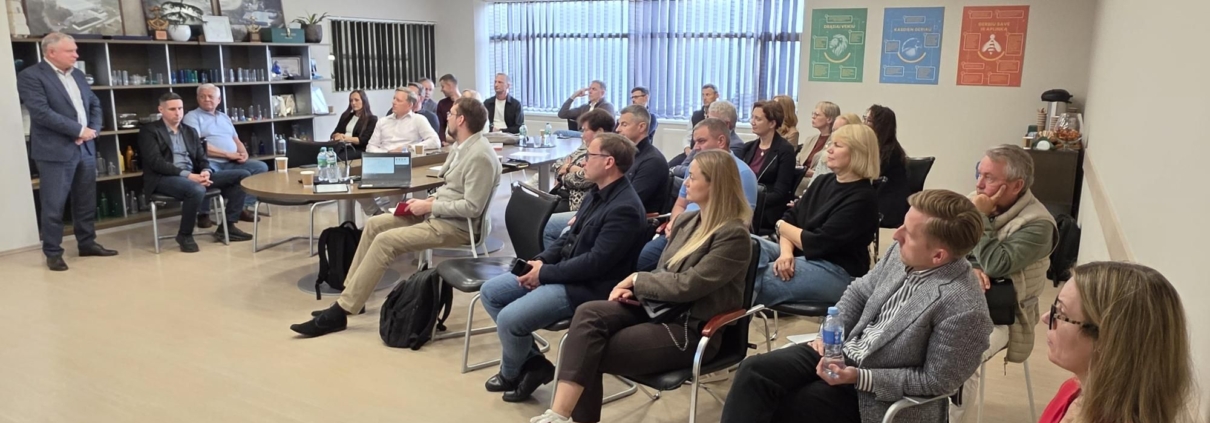
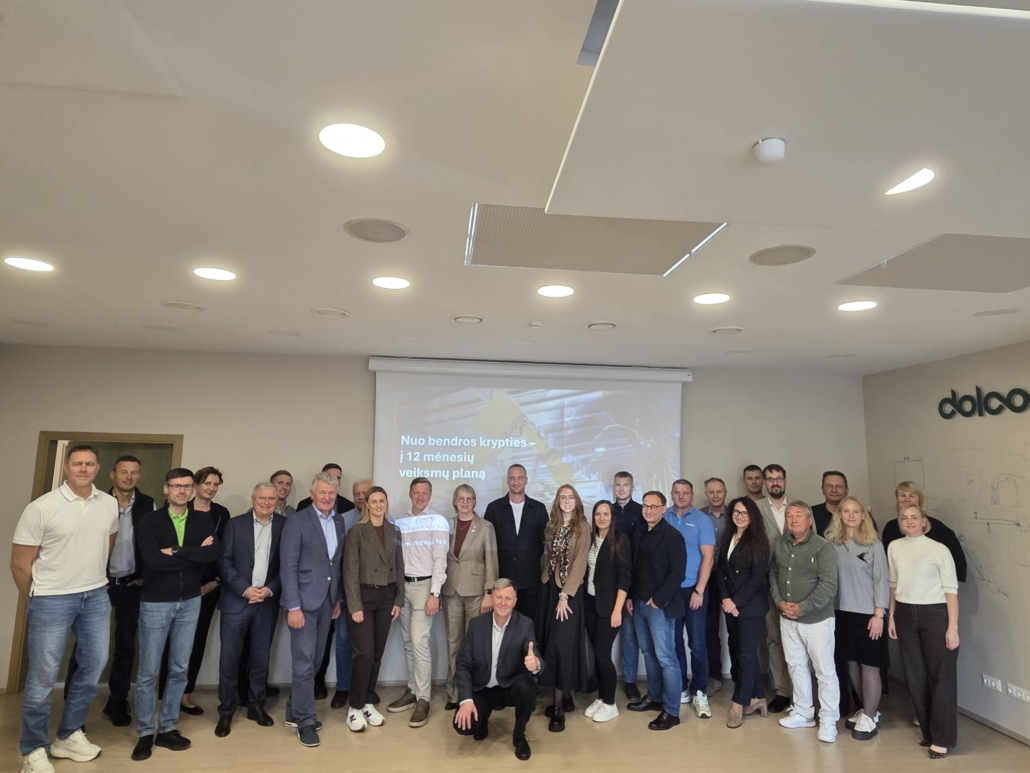
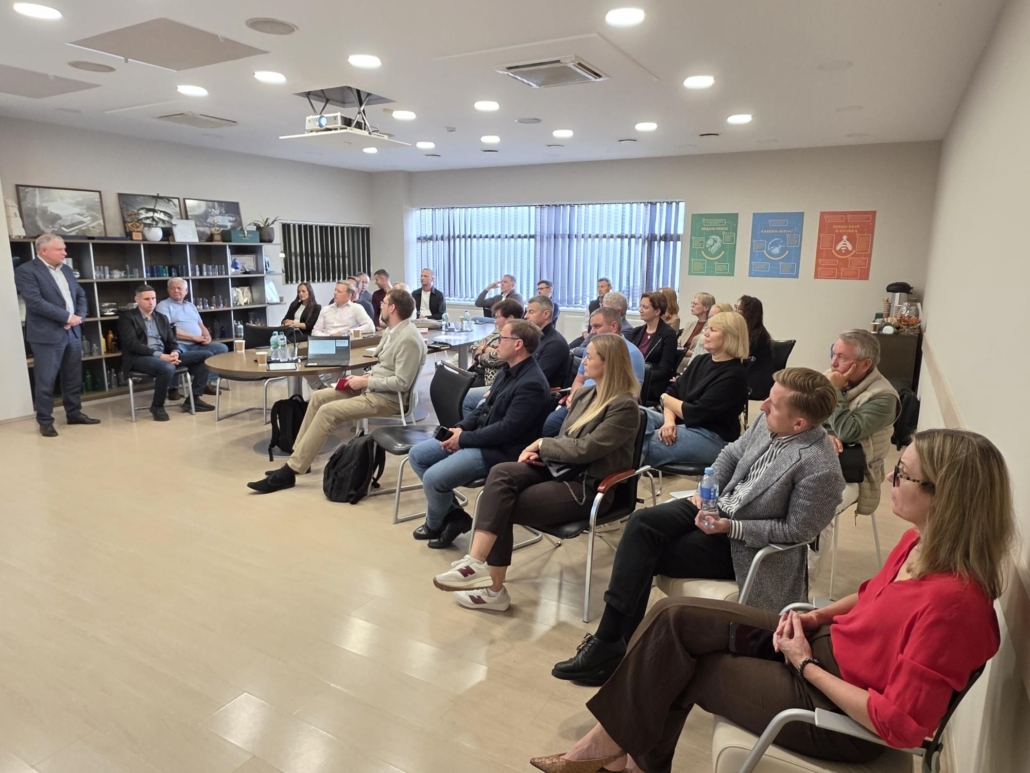
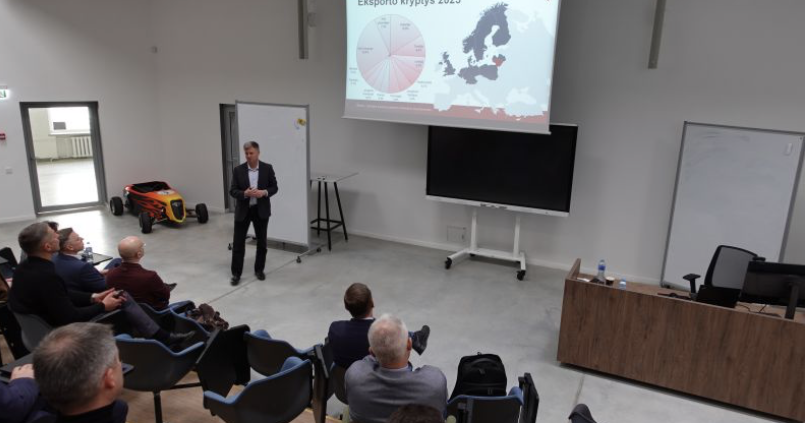
Leaders of the Lithuanian plastics sector gathered at Kaunas University of Technology to join forces in addressing the industry’s most pressing challenges. During the meeting, initiated by the Lithuanian Plastics Cluster, it was emphasised that a close link between manufacturing companies and universities as well as education/reserach centres is the key to a successful circular economy and international competitiveness.

We want to thank the plastics industry representatives for their active participation in our meeting. Your insights and the constructive dialogue prove that Lithuanian manufacturers are well-positioned and successfully navigating market changes.

👏 Special THANKS goes to Kazimieras Juzenas, Associated Professor at KTU and Prof. Dr. Virginija Jankauskaitė!

🔝 This event marked the start of a new phase of cooperation that will help the Lithuanian plastics industry grow sustainably.

Catch the future of PET development at Interpack 2026! FlexBlow is proud to unveil their next-generation stretch blow moulding lab machine. The company engineered full-scale production logic, pre-series validation, and prototyping into a footprint that is 30% more compact (under 5m²) — setting a new benchmark for industrial development equipment.

Why it’s important:
➡️ Maximum Flexibility. It can produce up to 99% of PET bottle designs used across the industry.
➡️ Rapid Changeovers. Tool-less mould changes in just 1 minute; complete format changes in under 10 minutes.
➡️ Auto-Reproducibility. All blowing parameters sync automatically to the FlexBlow Efficiency Cloud.
➡️ Seamless Scaling. Compatible with any mould (shell, block, or modular) making lab results instantly transferable to full-scale manufacturing.

The first machine of this new lab concept has been selected by a leading Japanese customer. It’s a significant achievement of the FlexBlow Team!

Stop by FlexBlow booth at Interpack 2026 to see why leading industry players are already adopting this new lab concept!

Doloop secured an AA grade — the maximum possible rating under the newly introduced BRC Global Standard (BRCGS) for Packaging and Packaging Materials, Version 7.

With 30 years of expertise in the PET industry, Doloop has successfully navigated many standard evolutions over the decades, but achieving this particular benchmark stands out as a major point of company pride.

The BRCGS (Brand Reputation Compliance Global Standards) Global Standard for Packaging Materials, V7 is the latest, globally recognised certification standard that ensures the safety, quality, legality, and authenticity of packaging products. It was the first packaging standard to be benchmarked by the Global Food Safety Initiative (GFSI) and is highly respected across the supply chain.

What is New in Version 7?
V7 was developed to address emerging industry risks, global supply chain challenges, and new packaging trends. The most significant changes include:
– Expanded Scope (Single-Use Products)
– Stronger Product Safety Culture:
– Refined Hazard Analysis and Risk Assessment (HARA):
– Enhanced Allergen Management
– Stricter Traceability
– Mandatory Unannounced Audits.

Why Does It Matter?
Achieving certification under BRCGS V7 proves to brands, retailers, and food service companies that a packaging supplier is:
– reliable,
– proactive about risk management,
– fully compliant with international safety expectations.

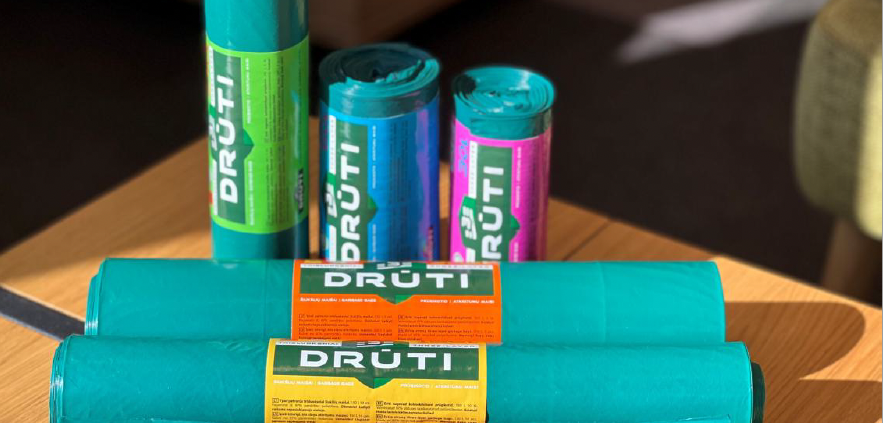
UAB Plamika introduces a next-generation solution to the market: DRŪTI polyethylene bags, using co-extrusion technology.

The Team of UAB Plamika is constantly seeking ways to combine innovation with practical efficiency. Recognizing that a single polymer cannot provide the full range of necessary properties, they have used the co-extrusion technology. This allows the simultaneous extrusion of three and more polymer layers, creating an exceptionally strong structure.

What makes DRŪTI products stand out? The triple-layer structure ensures the properties demanded by today’s market:
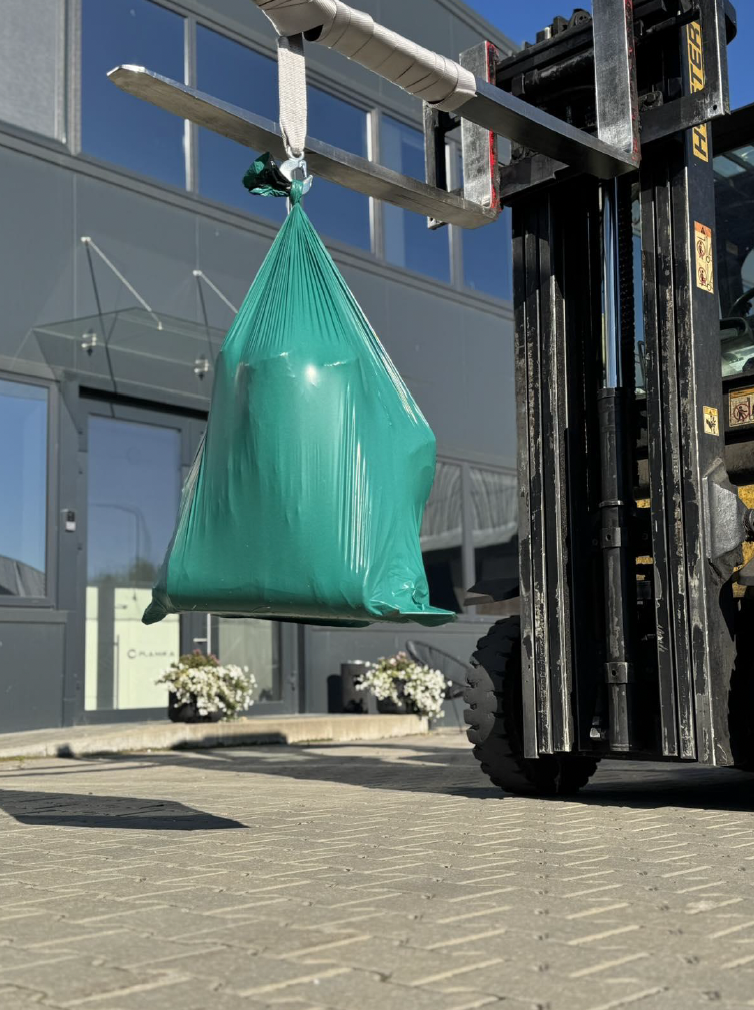
Exceptional Durability. High resistance to tearing, puncturing, and stretching.
Reliability. Superior sealing and elasticity.
Quality. Excellent optical and barrier properties.
Sustainability. Manufactured using 97% recycled plastic.

DRŪTI bags offer potential cost savings and an aesthetically pleasing appearance.

In comparison with mono-layer technology, 3-layer co-extruded bags offer higher strength and better physical properties while being thinner and reducing raw material consumption.

A wide range for every need:
– 30 L – for everyday household use.
– 60 L & 120 L – for private and professional use (larger bins).
– 150 L & 240 L – ideal for construction, renovation, or green waste.
– 350 L – large capacity bags designed for domestic containers.

We are glad for the innovation of our Cluster’s member – UAB Plamika!

The past year has been a period of ambitious change and consistent growth for Pack Klaipeda. Successfully implemented investments and expansion into foreign markets allowed the company to not only reach but exceed its annual targets.

Financial Results and Market Expansion

2025 was characterized by a rapid pace for the company. Pack Klaipeda achieved a remarkable 17% increase in turnover compared to 2024. This success was driven by targeted expansion into the Benelux countries and a consistent update of the product portfolio, which strengthened the company’s position in the international arena.

Investing in Modernisation

To achieve even greater operational efficiency, Pack Klaipėda invested €1.2 million into new production lines and infrastructure. This technological leap has opened new doors for the company:
➡️ Introducing innovative products to the market.
➡️ Attracting new, large-scale clients.
➡️ Automating processes and increasing production capacity.

Sustainability and Top Standards

The company continued to strengthen its commitment to quality and environmental responsibility. In 2025, international standards ISO 22000 and ISO 45000 were implemented. Additionally, a solar power plant installed on the building’s roof already covers up to 10% of the company’s total electricity consumption.

Challenges as a Sign of Growth

The successful introduction of new products and increased sales volumes brought new operational challenges. The main hurdle in 2025 was a shortage of storage space. It’s a clear indicator of the need for further infrastructure development.

2025 was a year of strategic transformation for Pack Klaipėda, where a 17% revenue surge and €1.2M investment in technology and sustainability solidified the company’s position as a growing leader in the Benelux and international markets.

The Think Circular 2025 forum held in Vilnius brought together experts in packaging, plastics, manufacturing, recycling, waste management and sustainability to discuss the European Union’s circular economy developments and their impact on business. The event highlighted not only technological and regulatory transformations, but also the growing importance of international partnerships. Special attention was given to cooperation with AIMPLAS, one of Europe’s most renowned plastics technology research organizations. Rosa González, a representative of AIMPLAS, analysed global trends in the plastics sector and outlined future directions for collaboration with the Lithuanian Plastics Cluster, which is a member of the organization.

The forum thoroughly discussed upcoming EU legislation that will change requirements for the design, production and waste management of packaging and products. Regulation (EU) 2025/40, entering into force in January 2025, will introduce a new system for assessing packaging recyclability, obliging manufacturers to ensure recyclability aspects of packaging by 2030. The need to reduce excessive packaging elements, review material composition and increase the share of recycled raw materials was also emphasized. Another important step is Regulation (EU) 2024/1781, which introduces the digital product passport, ensuring more transparent dissemination of information on product composition, origin and environmental impact throughout its entire life cycle.

Ecodesign was presented as one of the key pillars of the circular economy, helping reduce material use and ensuring that products become easier to recycle or reuse. Speakers stressed the need to shift toward monomaterials, lighten packaging, and avoid design choices that hinder recyclability. The integration of renewable and recycled raw materials into production and the use of by-products in different industries were also highlighted.

Business sustainability transformation is impossible without cooperation. Companies within the Lithuanian Plastics Cluster actively share knowledge and jointly implement innovative projects, with one of their key goals being to strengthen their position in international markets. Cluster members aim to grow together by developing modern, sustainable solutions that can be competitive not only in the Baltic region, but also worldwide.

The event was enriched by numerous expert insights and practical examples. Sanna-Mari Kaakinen presented ABB’s experience in implementing “Zero Waste to Landfill” principles, Greta Česnaitytė reviewed the impact of the PPWR regulation on Lithuania’s packaging system, and Audrius Jasėnas discussed the financial and tax challenges that companies will face starting in 2026. FlexBlow CEO Gintautas Maksvytis also delivered an informative presentation, introducing advanced manufacturing and sustainability integration solutions. During the panel discussion, members of the Lithuanian Plastics Cluster – including Dovydas Stulpinas (Doloop), Marius Maslauskas (UAB Plastara) and others – shared their insights.

The networking session following the presentations provided participants with opportunities to build new partnerships, exchange experiences and strengthen cooperation between business, academia and the technology sectors. Participants unanimously agreed that progress in the circular economy depends directly on the ability to share knowledge and work together. The event organizers thank all participants and hope that these discussions will lay a strong foundation for future joint projects and a more sustainable future for the plastics and packaging sector.

FlexBlow views 2025 as a year in which the projects launched in 2024 gained momentum, while the company naturally expanded into several new markets and sectors. Although market conditions were unstable, customer activity and interest in PET solutions remained high, allowing the company to steadily grow its export volumes.

Turkey, Egypt and Southern Europe: consistent growth

According to Gintautas Maksvytis, Executive Chairman of FlexBlow, one of the most notable events of the year was the installation of two company’s machines in Turkey. The client is one of the largest packaging manufacturers in the country, and this project strengthened FlexBlow’s visibility and opened the door for further expansion in the Turkish market.

At the end of the year, a contract was signed for the installation of FlexBlow equipment in Egypt. This is a market where PET production demand is rapidly increasing. The new project will boost the company’s visibility across North Africa.

The expansion in Southern Europe was also stable. In Albania, an upgraded FB4 machine was installed for a local detergents manufacturer, while in Greece, a FlexBlow 4 began operation at one of the country’s most modern converter plants.

In Portugal, a customer acquired a fully equipped system capable of producing containers up to 6 liters, with hot-fill capability and integrated quality inspection systems. This project will become an important FlexBlow reference in the Iberian Peninsula.

“These were significant achievements for our team—projects implemented in Turkey, Egypt, Southern Europe and Portugal have further strengthened FlexBlow’s position in strategic markets,” summarizes Gintautas Maksvytis, Executive Chairman at FlexBlow. “Successful equipment installations and growing customer trust show that we are moving in the right direction and are ready for even more ambitious expansion.”

Japan: a project requiring the highest precision

One of the key milestones of the year was FlexBlow’s first project in Japan. The contract was signed in 2024, and major engineering work was completed this year. The equipment is being developed for one of the largest beverage manufacturing groups in the region. According to G. Maksvytis, this corporation’s choice is significant not only due to the scale of the project, but also because the Japanese market, known for its exceptionally high standards, chooses only thoroughly perfected technologies. Entering this market demonstrates strong confidence in the precision of FlexBlow machinery.

North America: Expansion into New Segments and Wide-Neck Solutions

In 2025, the United States, one of FlexBlow’s most important markets, continued to be a hub of active expansion into new sectors. The company worked on projects for hand sanitizing, hospital and healthcare applications, as well as the personal care segment. One of these projects required forming a complex 800 ml bottle geometry where the upper part of the container had to be preserved with extreme accuracy, necessitating special forming and ventilation solutions.

Another project involved wide-neck PET containers used in the pest control industry, where both container construction and durability are critical. These initiatives strengthened FlexBlow’s position in North America and demonstrated that FlexBlow equipment can be adapted to a wide spectrum of high-specification applications.

Sustainability and the transition from HDPE to PET: a CO reduction example

In 2025, sustainability became particularly prominent in the Scandinavian chemical packaging market, where HDPE still dominates. A Swedish company that fills and packages household and technical liquids began implementing PET production using the FlexBlow TOTAL solution. This transition will reduce up to 800 tons of CO₂ per year, as packaging will be produced on-site, decreasing energy consumption and transportation costs.

For this project, FlexBlow developed a unique 40 mm UN PET preform compatible with caps and adapters commonly used in the chemical sector. Molds with moving parts and Deep Grip technology enabled the ergonomic handle to be formed directly into the bottle body. This case will be presented at the Blow Moulding Conference 2025 in Brussels as a real-world example of CO₂ reduction when transitioning from HDPE to PET.

Visibility at international exhibitions

According to Laura Valantinė, FlexBlow’s Head of Marketing and Communications, the company was highly visible at international packaging and plastics industry exhibitions in 2025. The year began with FlexBlow’s participation at Paris Packaging Week, followed by the PLMA International Trade Show in Amsterdam and the PETnology Europe Conference in Switzerland. Later, the company showcased its solutions at the Eurasia Packaging exhibition in Istanbul and PACK EXPO Las Vegas in the U.S.

“The highlights of the year were Drinktec in Munich and K 2025 in Düsseldorf. These are the global industry’s key events, where technological innovations and sector trends are introduced. At these exhibitions, FlexBlow focused on integrated quality inspection solutions, hot-fill capabilities, wide-neck container production, dual preform feeding for narrow and wide necks, automatic wall thickness control, auto quality assurance, auto reproducibility and vision inspection functions,” says L. Valantinė.

Showrooms and a global webinar: new ways to stay close to customers

In 2025, FlexBlow expanded its opportunities for direct customer engagement across various regions. Showrooms were organized in Tennessee (USA), Finland, Turkey, South Africa and Fiji. These locations allow manufacturers to experience the equipment firsthand, discuss upcoming projects, and see real solutions in their own region—without the need for additional logistics planning.

Valantinė also highlights an exceptional online event of 2025. In addition to physical visits, the company hosted one of FlexBlow’s largest online events—the global FlexBlow 2–3 Premium webinar, streamed simultaneously across multiple time zones. The webinar introduced a universal machine capable of producing both small 10 ml containers and 10-liter bottles. The event attracted participants from all continents and became a convenient way to learn about the latest FlexBlow technology for those unable to attend in-person events.

Looking at 2025, FlexBlow’s story appears to be a natural continuation of what the company has been building for three decades. This year, the steps became significantly broader. New countries, new sectors, complex conversions, international recognition and global visibility all proved that Lithuanian engineering can compete in any market worldwide.

We are proud to announce that the Lithuanian Plastics Cluster and the Slovak Plastics Cluster have officially signed a Memorandum to foster closer cooperation and shared growth.

The memorandum sets out key objectives aimed at driving innovation, sustainability, and knowledge exchange across our industries:
???? Knowledge Sharing: Exchange policies, best practices, and insights in plastics processing, circular economy, and chemical sectors.
???? Sector Collaboration: Expand cooperation and joint initiatives within plastics processing and circular economy fields.
???? Business and Technological Support: Facilitate partnerships and collaboration between Lithuanian and Slovak companies.
???? Event Participation: Actively engage in industrial events organized by both Parties.

This partnership marks an important step toward strengthening regional cooperation, supporting sustainable industry development, and boosting innovation in the European plastics sector.

The Slovak Plastic Cluster (SPC) is a non‐profit association of companies and institutions in Slovakia active in the plastics processing industry and related sectors. It was founded on March 13, 2009.

The Slovak Plastic Cluster is a central actor in Slovakia’s plastics processing industry: it acts as a facilitator of collaboration, innovation and competitiveness for its member companies. With its ties to education, research, international cooperation and sustainability agendas, it plays a strategic role in supporting the transformation of the plastics industry in Slovakia—especially in the face of global trends toward circular economy and advanced manufacturing.